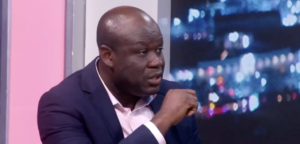
A leading member of the New Patriotic Party (NPP), Dr. Arthur Kobina Kennedy, has urged the Supreme Court to use an ongoing constitutional case challenging the delegates system of political parties to advance internal democracy and strengthen Ghana’s democratic governance.
He described the case as an opportunity to reform Ghana’s political system.
Context
The case was brought by former Minister of Environment Prof. Kwabena Frimpong-Boateng; veteran politician, Dr Nyaho Nyaho-Tamakloe; and former Education Minister, Dr Christine Amoako-Nuamah against the NPP, the National Democratic Congress (NDC), the Convention People’s Party (CPP), the Electoral Commission (EC), and the Attorney-General.
They are asking the Supreme Court to declare aspects of the delegates’ system used by political parties unconstitutional. The plaintiffs argue that limiting participation in presidential and parliamentary primaries to selected delegates infringes the constitutional rights of party members and undermines democratic principles.
The Supreme Court is expected to deliver its judgment on the matter on July 24.
Implications
In an open letter addressed to the Justices of the Supreme Court ahead of the ruling, Dr Kennedy said the outcome of the case could have far-reaching implications for the country’s democracy by promoting greater transparency, accountability, and wider participation in political party activities.
“You have a chance, in deciding this case, to strengthen our democracy and perhaps safeguard the future of the republic,” he wrote.
Internal democracy
Dr Kennedy argued that Article 55(5) of the 1992 Constitution requires the internal organisation of political parties to conform to democratic principles but maintained that current practices within the major political parties fell short of that constitutional requirement.
He contended that internal electoral processes, including the management of delegates’ registers and disciplinary procedures, were often not sufficiently transparent.
He also criticised the continued non-implementation of the Representation of the People (Amendment) Act (ROPAL), which allows Ghanaians living abroad to vote, saying many citizens outside the country remained unable to participate in national elections.
“The internal organisation of our political parties should reflect the democratic values enshrined in the Constitution,” he stated.
Monetisation of politics
The former NPP flagbearer aspirant also expressed concern about what he described as the growing influence of money in internal party elections.
He alleged that delegate-based elections had increasingly become influenced by vote-buying and financial inducements, a development he said undermined democratic competition and public confidence in the political system.
Dr Kennedy argued that such practices contributed to corruption in public life and weakened state institutions.
He linked these concerns to broader governance challenges, including illegal mining, flooding, pressures on the healthcare system and delays in the execution of public projects, although he did not provide direct evidence establishing a causal relationship.
Historical reference
Drawing on history, the US-based Ghanaian physician referred to the 1857 Dred Scott v. Sandford decision of the United States Supreme Court, arguing that judicial decisions could have profound consequences for the future of nations.
He urged Ghana’s apex court to ensure that its ruling strengthened democratic governance and public confidence in constitutional institutions.