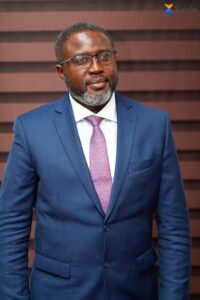
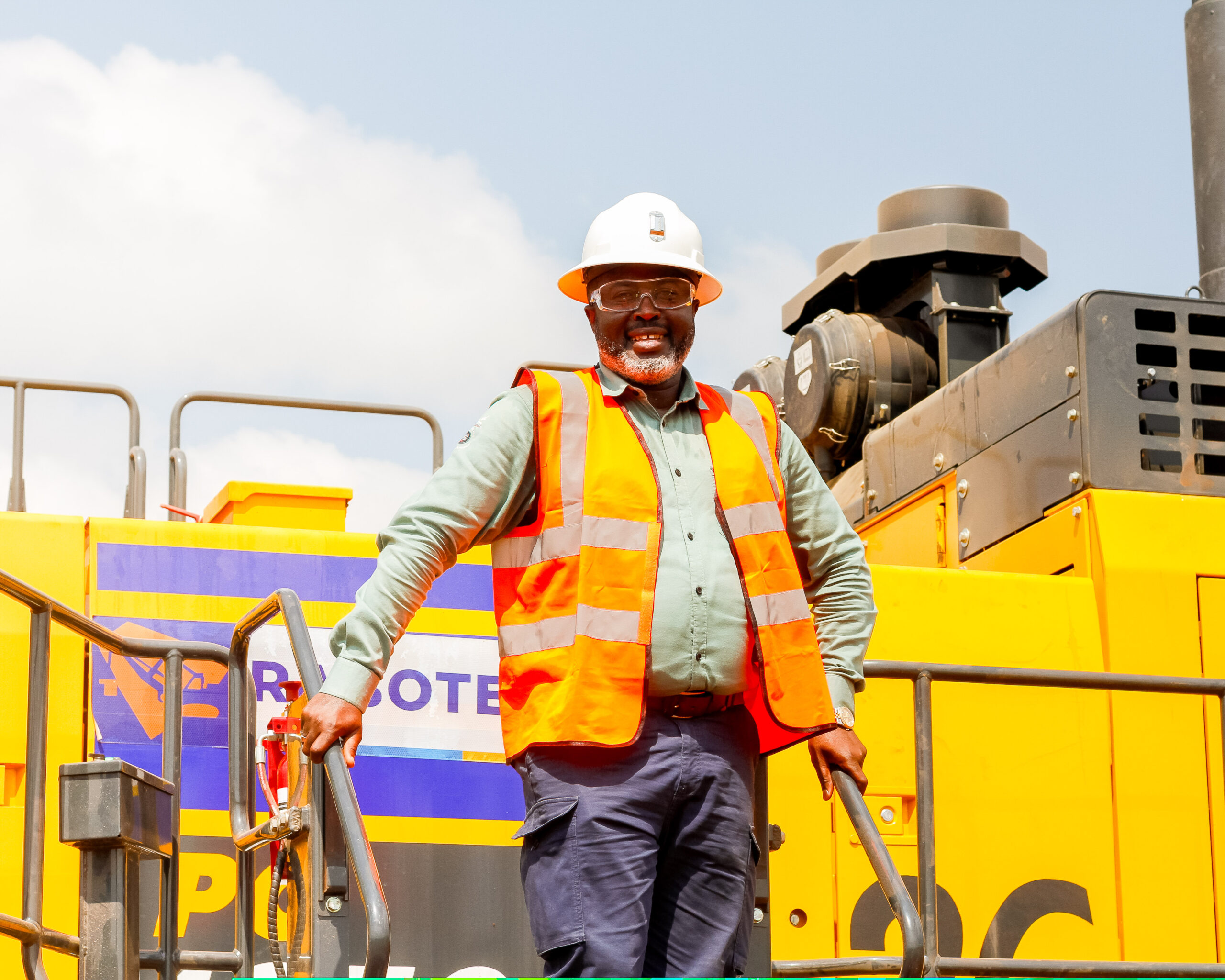
Renowned indigenous mining entrepreneur and Founder of Rabotec Group, Alhaji Ali Ibrahim, has called on Ghana to move beyond exporting raw minerals and focus on developing world-class mining technologies and systems that can compete globally.
Speaking in an interview, Ali Ibrahim said that although Ghana has more than a century of mining experience, the country has yet to transform that knowledge into indigenous innovations that can be exported to the rest of the world.
According to him, Ghana should leverage its abundant mineral resources and technical expertise to create homegrown mining solutions that other countries would be willing to adopt.
“My biggest focus is not just to say Ghana is the heart of mining in Africa. We should be able to develop a system that other nations and continents will come here to pay for because it was created by Ghanaians.”
He cited industry analyses indicating that Ghana still possesses mineral resources estimated to be nearly three times what has been extracted over the past century, suggesting the country has enough reserves to sustain mining for another 300 years.
“We have over 300 years of mineral resources ahead of us. It is time for Ghana to create mining systems that the world will come here to buy.”
Ali Ibrahim believes this presents a unique opportunity for young Ghanaian engineers, innovators and entrepreneurs to collaborate and develop technologies that will leave a lasting legacy for the country.
“If 10 or 15 young engineers come together with a unique mining innovation, I’m ready to invest in them. I want to be part of a legacy that the world will recognise as proudly Ghanaian.”
Reflecting on his journey as the head of an indigenous mining company, Ali Ibrahim said the greatest challenge facing local businesses is not access to capital but the lack of confidence Ghanaians have in one another.
“The biggest challenge is not finance. It is Ghanaians believing in Ghanaians.”
He argued that indigenous entrepreneurs often face criticism and opposition from their own people, making leadership more difficult than it should be.
“Being a leader in Ghana is like being on a political platform. You always have an opposition waiting for the day you make a mistake.”
Describing what he sees as a national mindset that must change, Ibrahim said successes are often forgotten while failures are magnified.
“Our good days are written on water, but our bad days are written on brass.”
He also recounted instances where former employees allegedly spread false rumours about his company after resigning, saying such actions discourage entrepreneurship and weaken indigenous businesses.
Questioning why many Ghanaians readily patronise foreign-owned companies while doubting local enterprises, he urged government, industry stakeholders and the public to support indigenous businesses capable of driving innovation, creating jobs and transforming the economy.
Rabotec’s Expanding African Footprint
Ali Ibrahim revealed that Rabotec is currently managing mining and infrastructure projects valued between US$1.5 billion and US$1.8 billion across several African countries.
The company’s operations span Ghana, Guinea, Mali, Sierra Leone and Burkina Faso, covering mining, infrastructure development and mineral processing.
According to him, Rabotec is executing projects worth approximately US$350 million in Mali, US$285 million in Sierra Leone, US$250 million in Burkina Faso, and US$250 million in Guinea, where the company is responsible for complete mining operations, including drilling, blasting, loading, hauling and mine management.
In Ghana, Rabotec is executing a US$400 million mining contract at Asanko Gold after the client renewed and expanded an earlier agreement.
“Currently, we are running projects worth between US$1.5 billion and US$1.8 billion over a five-year period. That reflects the scale of Rabotec’s operations across Africa.”
Investing in Sustainable Mining
Ali Ibrahim highlighted Rabotec’s leadership in the design and construction of Tailings Storage Facilities (TSFs), engineered facilities used to safely contain mining waste generated during mineral processing.
He said the company has built several of Ghana’s major TSFs and has undertaken similar projects across the continent, including in Sierra Leone.
“TSF construction is one of our strongest areas. We have built most of the large-scale tailings storage facilities in Ghana, and we’ve also delivered major projects outside the country.”
He explained that TSFs play a vital role in preventing hazardous mining waste from contaminating nearby communities and the environment, adding that all facilities undergo strict regulatory inspections and approvals.
He also disclosed that Rabotec has obtained ISO certification and is investing in green mining technologies to align with evolving global environmental standards.
“We are embracing every environmental and safety requirement. We are investing in green mining technologies because that is where the future of the industry is heading.”
Ambition to Become a Mine Owner
Beyond providing mining services, Ibrahim reiterated his ambition to transform Rabotec into a fully integrated mining company that owns and operates its own large-scale mines across Africa.
“My ambition is clear. Very soon, you will hear of Rabotec Mine. We are developing concessions in Ghana and other African countries, and we are working towards becoming mine owners.”
He expressed confidence that the company will begin operating its first fully owned large-scale gold mine within the next five years.
Quiet Philanthropy
Beyond business, Ibrahim said one of the initiatives closest to his heart is supporting prison inmates and helping former inmates rebuild their lives through employment.
He stressed that many inmates are imprisoned due to circumstances such as unpaid fines and other non-violent offences and deserve an opportunity to start afresh.
“Not everybody in prison is a criminal. Sometimes circumstances put people behind bars, and when they come out, they deserve another chance.”
According to him, several former inmates are now employed across Rabotec’s operations as drivers, equipment operators and skilled artisans.
He disclosed that even before the government’s Nkoko Nkitinkiti initiative was introduced in 2025, he had donated day-old chicks to inmates to equip them with livelihood skills and support their reintegration into society.
His corporate social responsibility initiatives also include support for hospitals, orphanages, flood relief efforts, dredging waterways in affected communities, constructing mosques and responding to humanitarian emergencies wherever assistance is needed.
Investing in People
Alhaji Ali Ibrahim revealed that, under his leadership, Rabotec has trained and mentored more than 300 employees who entered the mining industry with little or no prior technical knowledge.
“I have taken people who knew absolutely nothing about mining and today they are supervisors, superintendents, plant operators and industry professionals. That gives me great satisfaction as a CEO.”
He estimated that Rabotec currently employs more than 5,000 people directly across its operations, with the livelihoods of approximately 20,000 people supported through the company’s employment opportunities.
Overcoming Challenges
Despite the company’s rapid growth, Ali Ibrahim acknowledged that the journey has not been without setbacks.
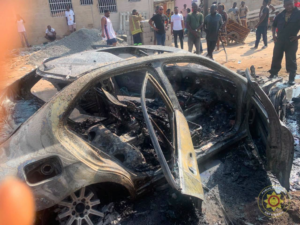
He revealed that one of Rabotec’s operational sites suffered a devastating attack this year when unidentified individuals allegedly set heavy mining equipment ablaze, causing losses running into tens of millions of dollars.
“We were hit by a calamity. Some unknown people attacked one of our operational sites and burnt equipment worth almost US$30 million. But we have overcome it and moved on.”
He also noted that Ghana’s local content and localisation policies are increasingly shaping mining regulations across West Africa, requiring companies to strengthen local partnerships while remaining competitive.
“Most countries in the sub-region are adopting Ghana’s localisation policies. We comply with local content requirements everywhere we operate, but the changing regulations remain a challenge.”
Despite these challenges, Alhaji Ali Ibrahim said Rabotec continues to expand its footprint across Africa, with exploration and mining interests in Ghana, Mali, Sierra Leone and newly acquired concessions in Guinea.
Looking ahead, he said the company’s long-term vision is to evolve from one of Africa’s leading mining contractors into a major mine owner and gold producer, while investing heavily in sustainability, compliance and innovation to position itself for the next phase of growth in Africa’s mining industry.
Away from business, Alhaji Ali Ibrahim is a devoted family man, happily married and blessed with children.