The 2026 Level Up Conference has empowered 360 young people in the Ashanti Region, equipping them with essential knowledge, skills, and practical strategies to advance their careers, entrepreneurial pursuits, and personal growth in a competitive job market.
The conference organised by the Asor Mentoring Network and hosted at the Kwame Nkrumah University of Science and Technology (KNUST) brought together university students, recent graduates, and young professionals to explore opportunities for personal and professional development and to discuss actionable strategies for building sustainable careers.
The conference was held under the theme “Empowering University Students, Graduates and Young Professionals to Create the Future They Want”.

It aimed at inspiring a mindset shift and equipping participants with the tools needed to transform their lives and make meaningful contributions to their communities and the nation at large.
The initiative comes at a critical time when many young Ghanaians face significant challenges securing employment after graduation, reinforcing the urgent need for career guidance, entrepreneurial skills, and lifelong learning.
Statistics highlight the scale of the challenge as Ghana produces between 100,000 and 300,000 tertiary graduates annually.
In 2025, 109,874 university graduates were recorded, while broader estimates, including professional institutions, place the total between 150,000 and 300,000 each year.
Youth unemployment among those aged 15 to 35 stands currently at around 21.9 per cent.
This underscores the importance of equipping young people with practical skills and competencies to boost their employment prospects and adapt to evolving workplace demands.
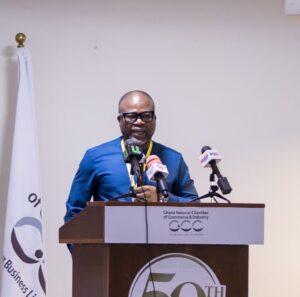
Addressing participants, the Founder of the Asor Mentoring Network and convener of the Level Up Conference, Dr. Shalom Addo Danso, emphasised that rapid technological change, information overload, and shifting workplace requirements make it essential for young people to rethink their approach to career development.
“There are a lot of technological innovations, and this is transforming how we work in the workplace. And now robots are there; AI is there. A job that five people in the past may have done is now supposed to be done by one person. Then there is information overload from social media. We hear everything; we are being bombarded everywhere, and sometimes it becomes a problem even to be able to break down what is right and what is not right. Then there’s a changing job environment,” he noted.
Dr. Danso explained that these realities motivated the creation of the conference, which aims to address the changing needs of young people and prepare them for the future.
“This forum has been initiated to engage young people and provide a learning platform for them to share information, knowledge, and ideas on entrepreneurship, leadership, and personal and professional development, and ultimately bring about a mindset change,” he said.
Dean of the School of Engineering Sciences at the University of Ghana, Professor Elsie Effah Kaufmann, urged participants to complement their potential with innovation, creativity, and continuous learning.
“It’s not just about having the ability to succeed but also about developing the skills and attitudes required to turn potential into concrete results,” she said. “The question is not whether you have what it takes to build a better future; you do. The question is whether you’ll develop the three things that turn potential into reality: innovation, creativity, and learning,” she said.
She further encouraged the youth to seize available resources and opportunities instead of waiting for perfect conditions.
“The future belongs to those who decide, right here and right now, that they are done waiting and are ready to begin,” she added.
A Fellow of the Ghana Institution of Planning and Professor of Planning at the Kwame Nkrumah University of Science and Technology, Rev. Prof. Daniel K. B. Inkoom, also highlighted the importance of cultivating positive habits in building character and achieving personal development.
Speaking on the concept of automaticity, which describes the ability to perform certain actions with minimal conscious effort through practice and habit formation, Prof. Inkoom urged participants to develop consistent behaviours that would contribute to their personal growth and effectiveness.
“We must reach the state of automaticity. I think it helps us, especially as young people, to build good character. It starts with habits. If you have good habits, they build into a character that is then able to make an impact in the world,” he said.
The conference also featured contributions from other resource persons, including Fransisca Taylor, Mike Ohene-Effah, David Adade-Boateng and Dorothy Ametefe.
Their sessions addressed a range of topics aimed at equipping participants with practical skills for navigating their personal and professional lives.
These included turning ideas into action, integrity, developing soft skills, building relationships and professional networks, and learning from the experiences of established individuals.
The sessions provided participants with opportunities to engage with experienced professionals, exchange ideas and gain insights into the attitudes and competencies required to succeed in an evolving employment landscape.
The Level Up Conference is an annual initiative of the Asor Mentoring Network designed to provide a platform for young people to learn, share knowledge, exchange ideas and build networks.
Since its inception in 2022, the conference has focused on empowering university students, graduates, young professionals and other young people through learning and personal development opportunities.
The 2026 edition reinforces the importance of equipping young people not only with academic qualifications but also with the practical skills, mindset and professional competencies needed to navigate changing workplace demands and contribute to national development.