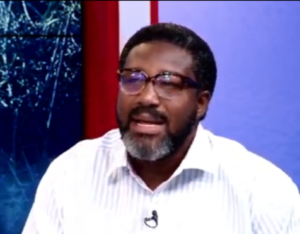
Lawyer and energy expert Lom-Nuku Ahlijah has called for greater accountability among political leaders, insisting that public officials must be held to their words to sustain public trust in governance.
Speaking on JoyNews AM Show on Monday, April 13, Mr Ahlijah said that while context and changing circumstances may sometimes require leaders to adjust their positions, such changes must be clearly justified to the public.
“Whatever you say should count for something,” he stressed, explaining that citizens rely on the statements and promises of politicians to make informed electoral choices.
According to him, the essence of political campaigning is to enable voters to understand leaders’ vision and direction before they assume office. He warned that it undermines democracy when politicians present a clear agenda but fail to follow through once in power.
“We would not like to listen to our politicians give us an idea of where they want to go, and then when they’re actually there, they’re not going that way,” he said.
Mr Ahlijah acknowledged that unforeseen developments may necessitate policy shifts but insisted that such changes must come with transparency, including clear justification and indications of whether initial commitments will be revisited.
LGBTQ+ Debate and Political Accountability
Applying this principle of accountability to current national issues, Mr. Ahlijah pointed to the ongoing debate surrounding LGBTQ+ matters, arguing that it is one area where leadership must reflect the will of the people.
He referenced the work of the Constitution Review Commission, which conducted nationwide consultations more than a decade ago. He noted that one of the most consistent views expressed by Ghanaians at the time was the desire for LGBTQ+ issues to be addressed explicitly within the country’s legal framework.
Although the Commission explained that not all matters belong in the Constitution and could instead be handled through legislation, Mr. Ahlijah said subsequent surveys and studies have continued to reflect strong and consistent public sentiment on the issue.
Values and National Development
Mr Ahlijah further argued that societal values are closely linked to national development and should not be treated as secondary concerns.
He explained that as countries pursue economic growth, strengthening value systems is equally important, as the two are deeply interconnected.
To illustrate this, he recounted an anecdote about a Ghanaian student in Germany who was reported by his partner for failing to pay a train fare, describing it as an example of how strong societal values influence behaviour and accountability.
“Values impact your economics, impact your development and everything else,” he said.
Call for Urgency
Citing positions taken by groups such as the Ghana Catholic Bishops’ Conference, Mr. Ahlijah maintained that the LGBTQ+ issue should not be pushed aside.
He also disagreed with suggestions by President John Dramani Mahama that the matter is not a priority, arguing instead that it remains a significant national concern that requires attention.
Mr. Ahlijah concluded that how leaders respond to such critical national issues ultimately reflects their credibility, stressing that accountability must remain central to governance. “Your word must have weight,” he said.