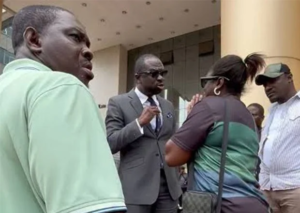
We have been discussing arrests, particularly by people who may not immediately be identifiable as law enforcement officers. Please be careful if people in plain clothes approach you claiming they have come to arrest you. Ask for proper identification. Ask which institution they represent. Ask why you are being arrested and where they intend to take you.
Where there is genuine doubt about their identity, ask to report with them to the nearest police station or other law enforcement office. Alert family or trusted persons. Have someone accompany you where practicable. Call your lawyer. Do not physically obstruct genuine officers effecting a lawful arrest. But being law-abiding does not mean blindly surrendering yourself to unidentified people simply because they claim the power to arrest you.
Check Article 14 of the 1992 Constitution and section 10 thereof of the Criminal and Other Offences Procedure Act. There are clear rules on what you are entitled to when someone is about to arrest you and what amounts to a lawful arrest and what amounts to an arrest that you are entitled in law to resist, which the court has vindicated. A lawful arrest by genuine law enforcement officers ought to be distinguishable from an abduction.
Now, I have received good feedback from respected people, including at the seat of government. They tell me many in the Newsfile audience believe I should not descend into the gutter with a man whose stock in trade is insults and manufactured stories. You are right and may want me or not want me to do what I am about to do, because you are not the class of audience to waste your precious time on gossip about people and their looks, their health, or their family being subjected to insults.
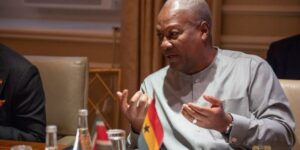
But one thing you deserve is answers to false allegations about me. The issues. I also have enormous respect for President John Dramani Mahama, who himself has publicly denounced the ugly subculture of insults and abuse that is increasingly poisoning our online public discourse. And the irony is not lost on me at all.
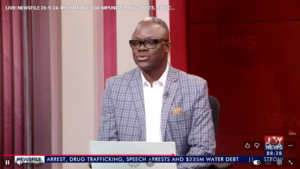
I have spent practically the whole of this week at a residential workshop training several dozen media hosts, editors and managers in media law, accuracy, verification, ethics, defamation and responsible journalism. I should therefore be the last person to leave that classroom and come here to practise the very conduct I have been teaching journalists to avoid. So I won’t. But silence should also not become evidence manufactured in support of a lie.
So for the last time, yes, for the last time, let me put a few things on record about Kelvin Taylor. I hardly mention his name. Many respectable people I know don’t either because they do not wish to participate in a social media culture when notoriety is gained through personal abuse and false allegations.
For about a decade, he has repeated a juvenile story about my breath. Even if I suffered from halitosis, which I do not, I’m struggling to discover its relevance to any matter of public interest on which I have spoken. But that is the very least of my concern.
He has manufactured stories about my family, my professional life and my supposed political connections. They are not differences of opinion. They are false, total falsehoods. He has invented stories about the life my wife and I supposedly lived in Kumasi or later in Accra. And even if I came from the poorest home in Ghana, what exactly would be the shame in that? I remain profoundly grateful for the modest successes God has blessed my family and me with through decent hard work. Decent hard work. There is no dishonour in humble beginnings.
Then came his confident announcement that President Akufo-Addo had pencilled me down for appointment to the bench. He told his followers to watch it happen. Well, they watched. It didn’t happen. Did he retract the story? Did his followers demand the evidence on which he made it? No. The story has simply changed.
Now he tells them that Dr Mahamudu Bawumia has promised me a place on the bench if he wins the next elections. How convenient. When one prophecy fails, simply move its fulfilment into the future. That’s what he does.
I stated publicly many years ago that I had no interest in joining the bench. Not in politics, as in partisan politics. If I ever change my mind, I believe I am eminently qualified to seek judicial office or political office through the proper processes. I would not require a politician to procure it for me.
But the more important question is simple. Where is the evidence? When did Bawumia make that promise? Where? Nobody is told. Through whom? What is the source? No source. His followers apparently demand none. An allegation is made. It is swallowed. When events expose it, another version takes its place.
Then there is Egyapa. He confidently announced that I was a lawyer in the infamous Egyapa transaction. Again, completely false. Not one engagement letter. Not one legal opinion. Not one invoice. Not one meeting record. Not one document showing I acted as lawyer for Egyapa. Nothing.
Meanwhile, I moderated Newsfile discussions in which that transaction was subjected to sustained and sometimes severe criticism to the chagrin of the NPP. This is precisely why serious journalism insists upon verification. If you say a lawyer acted in a transaction, show the evidence. If you say a president selected somebody for judicial appointment, prove it. If you say another presidential candidate has promised him the same appointment, reduce your basis.
A microphone does not convert gossip into fact. Following a class of following does not convert fabrication into journalism. And repeating a falsehood for 10 years does not eventually make it true.
There is a reason I have generally refused to engage. I have a family whose dignity I respect. I have professional colleagues. I have clients who entrust serious matters to me and are entitled to expect judgment and restraint from their lawyer. I have younger lawyers and journalists who watch what I do. And I have spent years, decades, building platforms patronised by audiences who expect evidence, reason, and responsible disagreement.
I owe all of them, all of you, better than an insult fest. I will not do that.
But I have a word for my colleagues in the Ghanaian media. We cannot condemn misinformation, disinformation, defamation, and abusive broadcasting when they come from mainstream radio, television, and newspapers. But suddenly lose our voices because the person doing it online may turn his insults and fabrications on us. That is how impunity grows. And it is precisely the culture President Mahama has rightly cautioned against.
Criticise me. Challenge my journalism. Attack my legal reasoning. Disagree with every opinion I express here. Show me where I got a fact wrong, and I will correct it. I do that.
And you know what he did this week? I mistakenly, by slip, used the elder Bafuboni for the younger Bafuboni who went to jail. I corrected it on this show. He clipped just the part without the correction and made a meal of it. That’s journalism? Really?
So, what I’m doing is accountability. But manufacturing stories about my wife, my family, my career, and my professional work is not accountability. It is not journalism. And discerning people can judge each of us by the record we leave behind.
I began this morning with a simple message about people claiming the authority of the state. Verify the badge. And I end with an equally simple message about those of us claiming the authority of the media. Verify the story. Ask for the evidence. Demand the proof.
And that is my take.