A month after PAAIS 2026, the summit’s convenor reflects on what the room revealed and what leaders in boardrooms and ministries must do now.
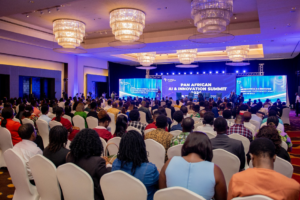
Watching the highlights film from this year’s Pan African AI & Innovation Summit, I was struck less by the stage than by the people in the audience. Bankers beside students. Regulators beside founders. Civil servants taking notes next to engineers who build the very systems those civil servants will one day have to govern. For two days in Accra, people who rarely shared a room faced a shared problem and treated it as their own.
That, in a sentence, is why the Pan African AI & Innovation Summit exists.
The audience no longer
For too long, the global story of artificial intelligence may have cast Africa as the audience. Models are trained elsewhere on data that rarely reflects our languages, markets, or people, then arrive here as finished products to be adopted, priced, and regulated after the fact. The risk is that we live inside it on terms that are written by someone else.
What I heard across the keynotes and corridor conversations this September was a refusal of that role. Africa will not wait to see how AI unfolds globally. We are deciding how it will serve our economies, our institutions and our people.
The gap we must name
Ambition is often perceived by many as readiness, but it’s not, and honesty demands that we say so.
Ahead of the summit, PAAIS surveyed 100 professionals from 89 institutions in preparation for our AI masterclass in partnership with the Chartered Institute of Bankers Ghana. 65% said their organisations were still at the pre-pilot stage. 68% had no AI governance committee. Most strikingly, 18 of the 35 organisations already piloting or scaling AI were doing so without one.
Read that again. Half of the institutions already putting AI in front of customers have no formal body asking who is accountable when it goes wrong. And the outcome respondents wanted most, chosen by 50%, was a governance framework their boards could use.
This is not a story of reluctance. It is a story of people moving faster than the structures meant to protect them and the public they serve. Closing that gap is precisely the work a convening like ours is built for.

Why the room matters
Policy developed without industry input can never be truly complete. Likewise, an industry that advances without policy rests on a fragile foundation. And when both are shaped without young people at the table, they risk building a future for a generation they never consulted. In Africa, home to the youngest population in the world, the voices, ideas, and aspirations of young people are essential to creating sustainable and inclusive progress.
PAAIS rests on four commitments: equipping young people with skills, strengthening policy and digital sovereignty, unlocking partnership and investment, and insisting that AI be applied ethically in the sectors closest to daily life, namely health, agriculture, education and finance. None of these works alone. A skilled graduate without an investor stalls. A brilliant regulation that no one in industry understands gathers dust. Investment without ethical guardrails eventually costs more trust than it earns. The summit’s purpose is to hold these forces in the same room long enough for them to discover they need each other.
What I ask of leaders
To business leaders: establish AI governance before your next pilot, not after your first incident. Your board deserves a framework, and your customers deserve to know that someone is accountable.
To technology leaders: build for the user in Kumasi as seriously as the user in London. Local language, local data and local context. They are the product.
To government institutions: We are grateful that our leaders are increasingly recognising convening as critical infrastructure. The regulators who engage founders, innovators, and industry leaders before drafting policy invariably create stronger, more practical, and future-ready frameworks. As several Ministers highlighted during the summit, digital sovereignty is about where data is stored. Equally, it is also about whether we possess the capability, expertise, and confidence to make strategic decisions for ourselves. True sovereignty is built on infrastructure, competence, ownership, and the capacity to shape our own technological destiny.
The human reality
It would be easy to write about AI entirely in numbers. But the energy in that hall was not statistical. It was hope, carefully tested. People did not come to be dazzled by technology. They came to find out whether it could be made to work for the nurse, the farmer, the bank teller and the young person they know by name.
The summit lasted two days. The work it began will take a generation. No one will hand Africa an AI future that fits us. We are building it together, in rooms like that one, to solve our own challenges and then carry it back into our boardrooms, ministries and classrooms.
The conversation continues toward PAAIS 2027. I invite every leader reading this to take a seat at the table.