Your romantic moment can be under siege by the weather. That’s how close the reality of climate change can dawn on you.
Some time ago, my friend Kojo shared the discomfort of the night’s hot breeze disturbing his attempt to get romantically intimate with his partner.
“It gets irritating to go skin-to-skin when you and your partner are already drowning in sweat. Even late-night cold showers don’t help matters,” he said. “How can you be on heat when you’re already on fire?”
Extreme weather adversely impacts every facet of life – heavy rains and heat waves are among the hazards faced by the ever-growing global population.
The realities of climate change, the vulnerabilities of communities on the frontlines, and the growing urgency for decisive action in the face of increasingly unpredictable weather patterns have shaped my experience and defined my journey through the global climate change negotiations.
As I find myself in Türkiye for most of November 2026 for COP31-related engagements, ahead of the next United Nations Climate Change Conference in Ethiopia (COP32), I cannot help but reflect on a journey that began more than a decade ago in Lima, Peru. It is a moment of nostalgia, but also one of renewed purpose, reminding me of how far the global climate conversation has travelled and how much more remains to be done.

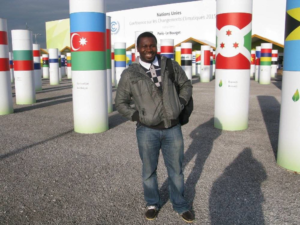
My first encounter with the Conference of the Parties (COP) process was COP20 in Lima, Peru, in 2014. It was an important moment in the evolution of international climate diplomacy. The world was preparing for a new global climate agreement, and the negotiations were increasingly focused on building consensus around a framework that would succeed the Kyoto Protocol.
For me, Lima was more than an international conference. It was an opportunity to witness first-hand the complexities of climate diplomacy, the competing interests of nations and the determination of vulnerable countries to ensure that their voices were not lost in the global conversation.
At a time when I was at the top of my journalism career after winning the African Climate Change and Environmental Reporting Awards (ACCER), I was enthusiastic and energetic in joining a ‘cult’ to up the narrative of Africa’s vulnerability to the climate phenomenon.
The crazy marketplace of ideas
Lima was an introduction to the realities of climate negotiations, what I later termed ‘a crazy marketplace of ideas’ – the long hours of deliberations, the difficult compromises, the diplomatic engagements and the persistent struggle to ensure that the concerns of developing countries, particularly those in Africa, received the attention they deserved.
The momentum from Lima would lead to another defining moment in France the following year.
Being part of the process at COP21 in Paris in 2015 remains one of the most memorable experiences of my engagement with climate change advocacy and reporting.
The adoption of the Paris Agreement was a historic milestone. After years of difficult negotiations, countries finally reached a landmark agreement to collectively address the climate crisis, committing to efforts to limit global warming to well below 2°C, while pursuing efforts to limit the increase to 1.5°C above pre-industrial levels.
I witnessed the excitement, relief and sense of achievement that accompanied the agreement. For many who had followed the negotiations and advocated for stronger climate commitments, Paris represented a breakthrough in global cooperation.
Yet, even then, there was an underlying question: how would the commitments made in conference halls translate into meaningful action on the ground?
That question has remained central to my work over the years.
My engagement with the climate agenda has evolved beyond attending international conferences. Through years of working with the Pan African Climate Justice Alliance (PACJA), I have had the opportunity to engage with a network of African civil society organisations, climate advocates, researchers, activists and community voices committed to advancing climate justice.
PACJA has been particularly instrumental in strengthening my appreciation of the African climate narrative and the importance of collective advocacy.
Africa contributes relatively little to global greenhouse gas emissions, yet its communities remain among the most exposed to the devastating consequences of climate change. From prolonged droughts and unpredictable rainfall patterns to flooding, food insecurity, coastal erosion, and the growing threats to livelihoods, the impacts are increasingly visible.
I’ve always shared my field reporting encounter with Nina Bawa, a farmer at Atebubu Amantin in Ghana’s Bono East Region, who struggled to harvest groundnuts because the rains had failed her. The challenge of not benefiting from her toil of tilling the land means her family’s livelihood could be impacted adversely.
For a journalist and climate advocate, these are not simply statistics to be discussed at international conferences. They represent the lived experiences of farmers losing their crops, fishing communities struggling with declining catches, women and young people facing livelihood uncertainties, and vulnerable households whose resilience is continually tested.
This reality has reinforced my conviction that climate negotiations must remain connected to the people they are intended to serve.
My more recent engagement with the African Group of Negotiators (AGN) has offered another important dimension to this journey. It has deepened my understanding of the technical and diplomatic processes through which Africa seeks to advance its collective interests in global climate negotiations.
The AGN’s work is critical in ensuring that Africa speaks with a stronger, coordinated voice on issues of climate finance, adaptation, mitigation, loss and damage, technology transfer and a just transition.
It is also a reminder that Africa must not merely participate in shaping the global climate agenda; it must actively influence it.
“For our countries, the negotiations are therefore not merely about text, paragraphs or procedural decisions,” said AGN Chair, Nana Dr. Antwi-Boasiako Amoah. “They are about our people, our economies and our development prospects”.

Türkiye: A moment of reflection and renewed commitment
Being in Türkiye at this point in the climate journey offers an opportunity to reflect on the momentum built since those early negotiations in Lima and the historic breakthrough in Paris.
There is something particularly nostalgic about revisiting the journey from COP20 to the present, especially considering the years spent working alongside climate justice advocates through PACJA and my evolving engagement with the African Group of Negotiators.
The global climate conversation has changed considerably. We have moved from the intense debates about securing a universal agreement to the more demanding task of implementing commitments, mobilising climate finance, strengthening adaptation and ensuring that countries and communities can withstand the growing impacts of climate change.
However, the gap between commitments and implementation remains a major concern.
For Africa, the urgency is even greater. Communities facing climate-induced displacement, declining agricultural productivity, water stress and extreme weather events cannot afford endless cycles of promises and delayed action.
Will Ethiopia deliver action?
As Africa look towards COP32 in Ethiopia in 2027, I hope the conference will provide an important opportunity to advance Africa’s climate priorities and strengthen the continent’s influence in shaping solutions that respond to its unique vulnerabilities and development aspirations.
Ethiopia, as an African host, presents an opportunity to bring the climate conversation closer to the realities of the continent. It should be a moment to demonstrate that Africa is not simply seeking solidarity or support, but is also bringing ideas, innovation, indigenous knowledge and practical solutions to the global climate challenge.
Looking back, I am grateful for the opportunities to witness and contribute to different chapters of the global climate negotiations.
From Lima to Paris, through the years of engagement with PACJA and now the African Group of Negotiators, the experience has strengthened my commitment to amplifying Africa’s voice in the climate conversation.
As a journalist, my responsibility has always been to connect policy to people, negotiations to realities, and commitments to accountability. I have sought to contribute to an African narrative that does not portray the continent merely as a victim of climate change, but recognises its people as active participants in developing solutions and shaping a more sustainable future.
I remain hopeful that the years of engagement, advocacy, reporting and contribution to this collective African effort will yield the desired impact.
But that impact must be measured beyond the number of conferences attended, declarations adopted or commitments announced.
It must be seen in the resilience of our communities, the protection of livelihoods, improved access to climate finance, stronger adaptation systems and the ability of vulnerable populations to live with dignity despite the growing threats of climate change.
Ultimately, the true success of the climate negotiations will not be determined by what happens within the conference halls, but by what changes in the lives of people outside them.
That is the journey I hope we are still making – from talks to action, from promises to delivery, and from global commitments to tangible climate justice for Africa.